Download document () of 20
 Send email
Download
You have exceeded the download limit

For over 60 years, the fire protection industry has relied on TOLCO seismic bracing products, B-Line series pipe hangers and services. And today, our TOLCO seismic bracing attachments continue to lead the industry with compliance to the new UL203A standard for a 2.2 safety factor rating and improved load ratings.
Productivity quick links:
Fig. 29 | Fig. 131 | Fig. 980 | Fig. 74 | Fig. 828 | Fig. 4L | TOLBrace software | Branch line restraint white paper | UL2023A blog content


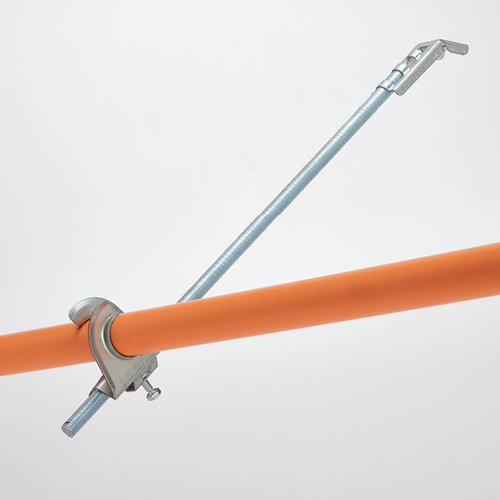
The TOLCO Fig. 980 is designed to attach to the structure or structural attachment and is used with strut channel or pipe as the brace member. It features a concentric attachment opening which is critical to the performance of structural seismic connections, as well as a smaller profile jaw of stamped steel for installation in limited space applications. Plus, it is tested and UL listed to the new UL203A standard for a 2.2 safety factor rating and improved load ratings.


As a component of a seismic bracing system, a branch line restraint performs a critical function. Its primary purpose is to prevent the movement of fire sprinkler branch lines which could cause damage to themselves, the structure or other nearby non-structural systems.
A branch line restraint is different than a sway brace or a hanger when it comes to certification and testing. A branch line restraint must be Underwriters Laboratories (UL) listed to perform its function, but its function is not clearly defined by National Fire Protection Association (NFPA) 13. Per NFPA 13 (2013) section 9.3.6.1 states, “A restraint is considered a lesser degree of resisting loads than bracing.” This, in turn, has led to some confusion throughout the building and construction industry.
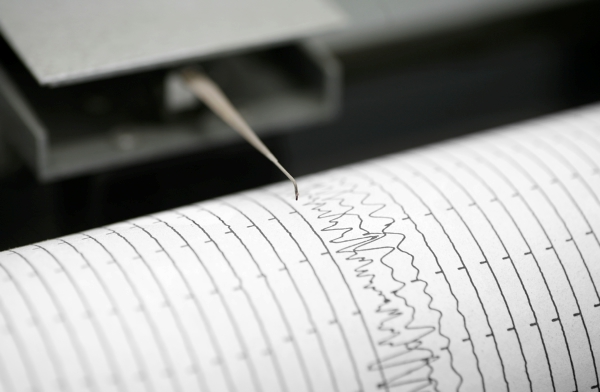
In areas where earthquakes are common, seismic bracing is required to assist in fire suppression. To ensure stronger, more dependable bracing systems for sprinkler systems, Underwriters Laboratories (UL) recently updated its 203A Standard for Safety Sway Brace Devices for Sprinkler System Piping, which now requires testing seismic bracing components at more angles and increasing the safety factor used to establish brace capacities.
While everyone in the industry must re-test their products to comply with UL 203A, we continue to advance our products and push for higher safety standards. It’s vital that published catalog loads ensure, at a minimum, the same product performance. That’s why we’ve elected to make product design modifications across our seismic bracing portfolio to maintain currently published catalog loads for as many of our products as possible and, in some cases, are changing designs to exceed newly required product loads.
View additional resources and solutions to help fire sprinkler industry customers save-time, reduce complexity and optimize the return on their investment.

 MyEatonFAQs


