Download document () of 20
 Send email
Download
You have exceeded the download limit
Enhancing worker safety using Industry 4.0 technologies
Putting digitalization to work provides a powerful lever to enhance safety. The ability to bring information in, aggregate it in one place and make it available for personnel can reduce exposure to hazards. In other words, active digital correlation can help teams be better prepared when they need to interact with electrical equipment.
Safety is a foundational and operational concern for industrials and manufacturers. Impacting safety requires the right education, training and controls to eliminate or reduce hazards. The hierarchy of controls (source: The National Institute for Occupational Safety and Health) provides guidance in preferred order. Fundamentally, safety programs must seek to eliminate hazards and keep people out of harm’s way, and digitalization provides vital tools to do just that.

Getting to zero total recordable incident or case rate (TRIR/TRCR) requires the ability to identify potential issues and avert them. Let’s look at how proven digital strategies can reduce risk and avoid unplanned or irregular work:

Watching for problems in electrical and mechanical systems is important, and digital monitoring provides a powerful tool to understand assets and environmental conditions. Digitalization allows this to be accomplished safely, without exposure to equipment or environment—reducing risk and providing insights on changes to conditions and equipment performance.
Further, digital equipment monitoring helps reduce complexity (and risk). Complicated repairs create added risk exposure and typically have greater potential for injury. For example, hoisting is a dangerous process from an Environmental Health & Safety (EHS) perspective. If an electrical motor can be repaired early because of motor health warnings (through an intelligent motor starter), it may be a simpler repair, whereas if the motor fails, it will likely need to be hoisted out for replacement. In other words, having information as a situation develops can create less opportunity to get hurt.
There is widely recognized value in keeping people out of harm’s way. It’s why the National Fire Protection Association (NFPA) 70B became a standard, not just a recommendation. This standard is considered the minimum requirement for safe electrical work procedures and OSHA can utilize this as the basis for issuing citations.
Digital tools allow you to keep tabs on things that have traditionally gone unmonitored or only observed occasionally (on a cycle), which can help meet NFPA 70B and impact safety. Specifically, condition monitoring systems allow you to make smarter maintenance decisions based on actual equipment and environmental data, which can help you understand the root cause of a problem. Digitalization enables you to identify unsafe conditions as they develop and detect problems in areas that are hard or unsafe to access.


Don’t underestimate the value of the right notification at the right time to the right people. The root cause of many recordables or near misses is complacency, distraction, insufficient knowledge and lack of planning. Digitalization can provide the needed notifications to avoid these issues and enable you to plan for various scenarios.
Given that there’s so much data available, how are you able to act on it at the right moment? Safety requires urgency, and that’s exactly where alerts come in. Blinking red lights and horns are insufficient and trending data also misses the mark—alerts need to deliver tangible information at the right moment. You need to know when a situation reaches a certain threshold and immediate action is needed.
Importantly, alerts are modeled on a set of criteria, helping you establish what action needs to occur well before a situation arises. In other words, setting alerts enables you to act faster and smarter because you can better pre-plan what needs to happen in a variety of given situations.
Ready access to the right PPE requirements is not easy, especially as requirements will invariably change as conditions evolve. And, sometimes, there is no sufficient level of PPE. Personnel need tools to avoid dangerous conditions and situations in the first place.
A digital dashboard view can flag safety issues and provide recommendations that reflect real-time conditions—whether it’s for the appropriate level of PPE or to avert exposure. And the needed PPE can be identified via an alert to help ensure personnel are prepared with the proper equipment prior to starting work. For example, in a situation with dangerous gases and a high-pressure environment, the need to detect exposure in real time is vital, before personnel ever enter the room. Digitalization enables your team to turn to planned, safe work practice responses, including wearing the right personal hazard detection monitor devices, if needed.

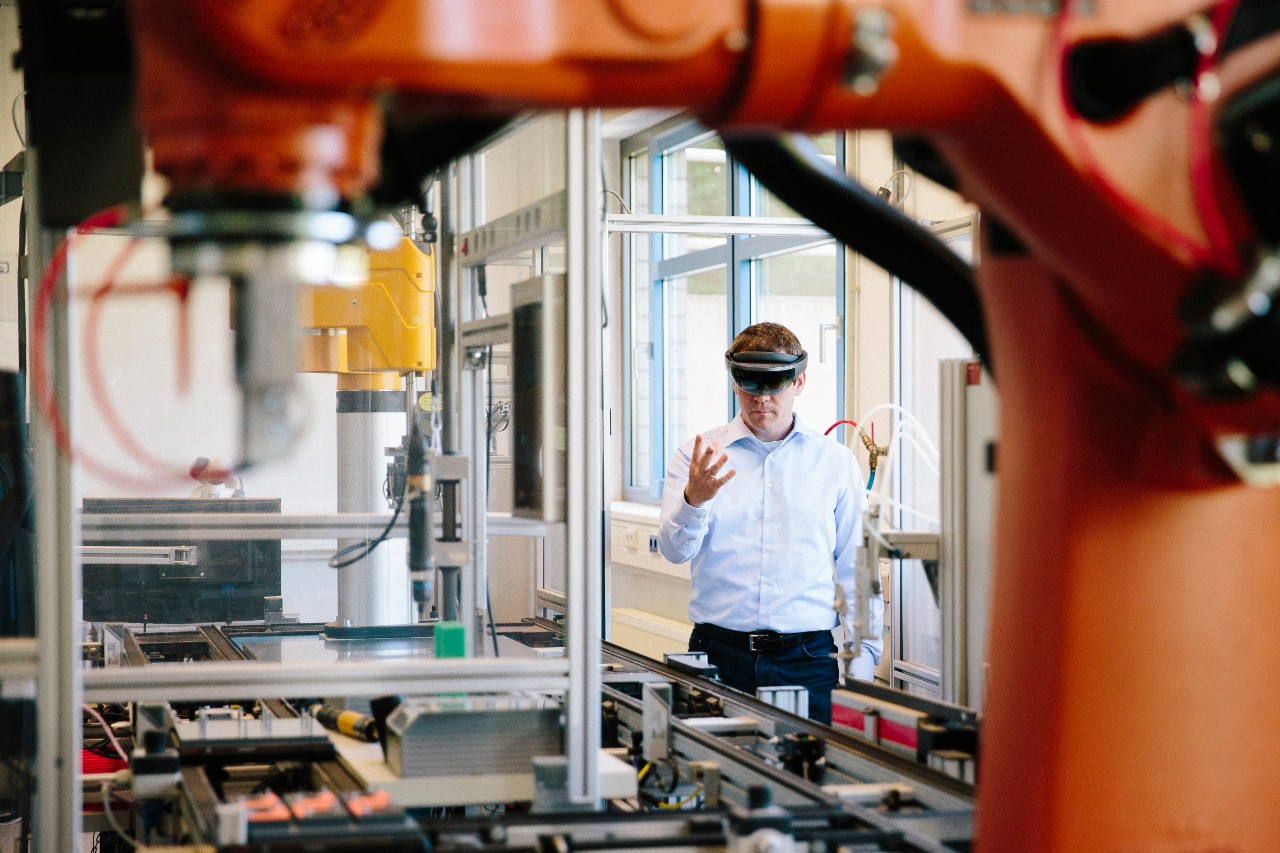
Digital tools can empower your teams with experiential training and tutorials enabling familiarity with equipment and proper procedures to advance safety. For example, your teams can learn how to safely operate equipment in a virtual environment, getting a tutorial on how to open, close and rack circuit breakers and operating switches and more.
Further, your teams can use digital solutions to support testing required for qualified workers per NFPA 70E. This provides your team members with feedback on specific tasks required for procedures like lockout/tagout, helping ensure that safety analysis, protective barriers, requiredneeded PPE and verification for the absence of voltage are all conducted appropriately. In other words, digitalization also provides vital tools to help team members gain experience and get feedback to advance safety—helping protect people, equipment and processes.

 MyEatonFAQs


